
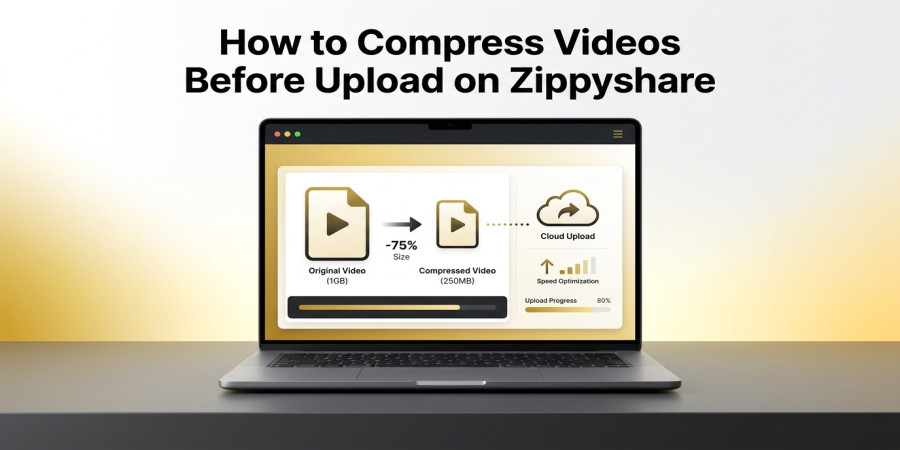
How to Compress Videos Before Upload on Zippyshare
We have all been there. You just finished editing a fantastic video, or you have a massive project file ready to share with your team. You head over to your favorite file hosting site, Zippyshare, eager to get it uploaded. Then, you look at the file size. It is massive. Your excitement quickly fades as you realize that uploading this monster file is going to take hours, or worse, it might fail halfway through because your internet connection decided to take a nap.
Large video files are a modern headache. They eat up your local storage, choke your internet bandwidth, and try the patience of anyone waiting to download them. If you are a blogger trying to share content, a business owner sending promotional clips, or just a beginner trying to send a funny clip to a friend, huge files are your enemy.
Fortunately, there is a simple solution to this common problem. By using a reliable video compressor, you can drastically reduce the size of your media files without turning the quality into a blurry mess. Once compressed, sharing those files on platforms like Zippyshare becomes an absolute breeze. Let us dive into why compression matters and exactly how you can do it seamlessly.
Zippyshare has long been a go-to platform for millions of users because it is fast, free, and incredibly straightforward. However, like every file hosting service, it has its own set of rules and limitations. If you try to upload a raw, uncompressed video straight from your camera or phone, you are likely going to hit a wall.
When you shrink your videos first, you save an immense amount of time. Think about your upload speed compared to your download speed. For most of us, uploading takes much longer. A smaller file means less data traveling from your computer to the server. This translates directly to faster upload times and a much lower chance of the process getting interrupted by a sudden network hiccup.
Furthermore, compressing your files is a matter of respect for your audience. If you share a massive link with your blog readers or business clients, they have to spend their own time and data downloading it. By optimization, you provide a much better user experience. They get the content they need in a fraction of the time, and your brand or blog looks highly professional.
You might be wondering how a tool can make a file smaller without completely ruining the way it looks. It feels a bit like magic, but it is actually just smart technology at work. Every video is made up of a massive amount of data, including individual frames, audio tracks, and color information. A lot of this data is actually repetitive or unnecessary for the human eye to notice.
A quality video compressor analyzes the file and removes that redundant data. For example, if a scene shows a still blue sky for five seconds, the compressor does not need to save every single pixel for all five seconds. It simply remembers the blue sky and repeats it. This process shrinks the file size dramatically while keeping the visual quality looking crisp and clean on normal screens.
When looking for the right tool, you will come across options that function as an any files compressor, meaning they can handle documents, images, and audio alongside video. However, dedicated tools often give you more control over the specific settings of your media files. Finding that sweet spot between a tiny file size and clear visual quality is the ultimate goal.
Getting started with file optimization does not require a degree in computer science. Anyone can master it in just a few minutes. To help you get your files ready for Zippyshare, we have broken down the entire process into a simple, easy-to-follow sequence.
Many beginners feel intimidated when they open a video converter or compression tool for the first time. There are often a lot of sliders, boxes, and technical terms. You do not need to know what every single button does to get great results. Focusing on just a few key settings will give you the control you need.
The first setting to watch is the resolution. If your video is in 4K, it is going to be massive. For sharing online or sending to clients, 1080p or even 720p is usually more than enough. Lowering the resolution is the fastest way to drop the file size. Next is the bitrate, which controls how much data is processed per second. Lowering the bitrate reduces file size, but going too low makes the video look blocky.
Finally, pay attention to the container format. MP4 is the undisputed king of web video because it offers fantastic compression while remaining compatible with almost every device on earth. If your file is currently in an older format like AVI or MOV, using your tool to change it to MP4 will instantly save you space before you even tweak the other settings.
Not all compression tools are created equal. Depending on your specific needs, your technical comfort level, and how often you share files, you might prefer one method over another. Some people love the convenience of web-based tools, while others need the raw power of desktop software.
To help you decide which path to take, we have put together a quick comparison of the most common methods available today.
| Method Type | Best For | Pros | Cons |
|---|---|---|---|
| Online Web Tools | Quick, one-time use for smaller files | No installation needed, works on any device | Upload limits, requires internet connection |
| Desktop Software | Large files, batch processing, regular use | Powerful, works offline, advanced settings | Requires installation, learning curve |
| Mobile Applications | Quick sharing directly from phones | Highly convenient, fast for social media | Limited control, can drain phone battery |
Once you have successfully shrunk your file down to a manageable size, you are ready to head over to Zippyshare. To make sure your uploading experience goes as smoothly as possible, there are a few extra tips you should keep in mind. These small details can save you from unexpected errors or lost links down the road.
By keeping these quick pointers in mind, you can turn your file sharing routine into a fast, stress-free process that keeps your business or blog running smoothly.
How Bloggers and Business Owners Benefit from File Optimization
If you run a business or a busy blog, efficiency is everything. Spending hours waiting for files to upload or deal with complaints from clients who cannot download a massive video is a huge waste of time. It hurts your productivity and can make your operation look disorganized.
When you incorporate a reliable video compressor into your daily workflow, you regain control over your digital assets. You can share video updates with your remote team in seconds. You can distribute promotional clips to your audience without worrying about high data costs. It streamlines your entire content creation pipeline, leaving you with more energy to focus on growing your brand.
At multicompressor.com, we understand the value of simplicity and speed. Utilizing the right tools allows you to present a polished, professional image to the world. Your videos look great, your links load fast, and your audience stays happy and engaged.
Zippyshare allows users to upload files up to 200 MB each for free. If your video file is larger than this limit, the platform will reject the upload. This is exactly why using a compression tool is so important, as it helps you bring those large files under the limit without sacrificing too much visual quality.
No, compression does not have to ruin your video. While extreme compression can cause blurriness, using a modern tool with the right settings allows you to reduce the file size significantly while keeping the video looking crisp and clear on smartphones, tablets, and laptop screens.
Yes, general file compressors like ZIP or RAR tools can reduce file sizes, but they are not the best choice for video. A dedicated video tool actually changes the internal structure of the media code, which results in a much smaller file size while keeping the video playable without needing to extract it first.
Files uploaded to Zippyshare generally remain active as long as they receive downloads. If a file does not get a single download for 30 consecutive days, it is automatically removed from their servers to free up space. If you need permanent storage, you should look into paid cloud options or keep local backups.
Zippyshare is fantastic for public files, blog downloads, and casual sharing, but it is not designed for highly confidential data. Because the download links do not require a password by default, it is best to use secure, encrypted business hosting platforms for sensitive or private company information.
Dealing with massive video files does not have to be a frustrating experience that slows down your day. By understanding how to use a video compressor effectively, you can take control of your media files and make them work for you, not against you. Shrinking your files protects your bandwidth, saves precious time, and offers a vastly superior experience for anyone downloading your content.
Platforms like Zippyshare are incredibly powerful tools when used correctly. When you pair their fast, free hosting with smart file optimization techniques, you create a seamless sharing system that benefits your blog, your business, or your personal projects. Take a few moments to optimize your media before your next upload, and you will never look back at slow upload bars again.
Popular articles

Jul 11, 2024 12:47 PM

Sep 25, 2024 09:47 AM

Aug 19, 2025 08:13 AM
Apr 18, 2025 01:10 PM

Aug 01, 2025 11:19 PM
Categories
Comments (0)